
Time to reflect – why legislators and brands are playing catch up on the growing microplastic challenge
Anthony Kolanko, Chief Commercial Officer at Matter
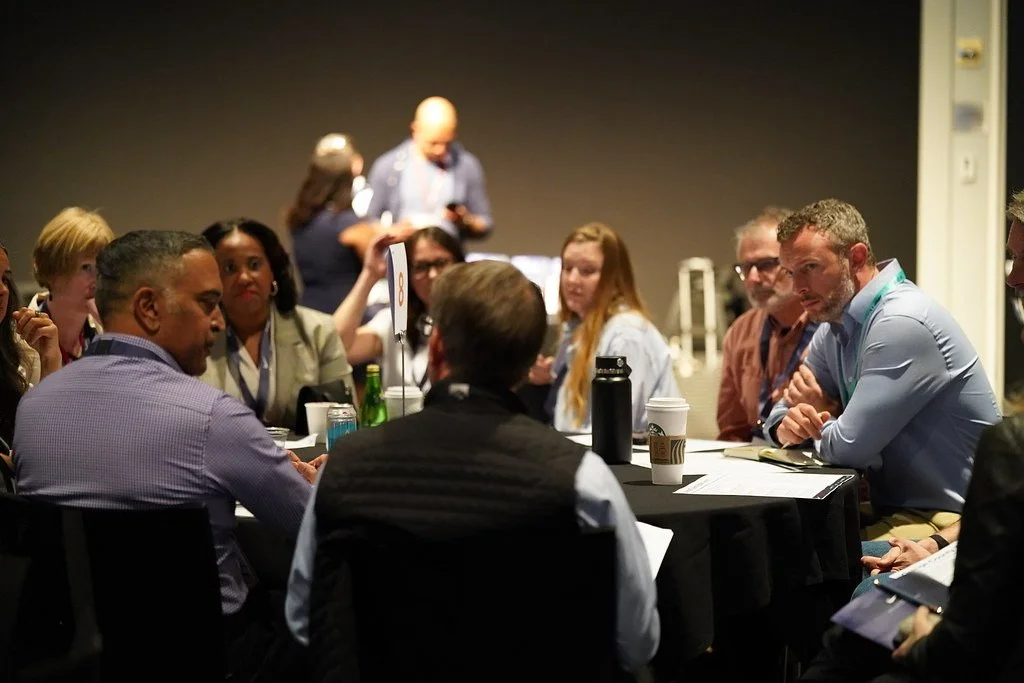
Anthony (far right) at a meeting in Oregon
I’ve recently spent some time in Oregon, meeting with global sports and fashion brands, NGOs and legislators to understand how growing awareness of microplastic pollution is influencing decision-making and shaping the political agenda.
While consumers increasingly view microplastics as an environmental and public health crisis, legislators remain constrained by lengthy policy processes, while some of the most forward thinking brands are realising this isn’t tomorrow’s problem, it is today’s strategic risk. Change is inevitable, the real question for each group is who seizes the initiative and opportunities, and who fails to adapt and suffers the associated consequences.
Microplastics are an issue that is now firmly embedded in America’s national conversation, with exceptionally high levels of awareness and recall from a topic that is motivating adult Americans to call for meaningful and coordinated action. The latest Ocean Conservancy survey shows a 32% increase in awareness of microplastics as an issue of concern since 2023, with 9 out of 10 Americans surveyed expressing concern and 6 out of 10 ‘very’ concerned with the proliferation of micropollution.
Since the very first study into microplastics was published in 2004 by Richard Thompson at the University of Plymouth, this niche area of research has morphed into a dynamic and urgent field of study. As the weight of academic research and evidence mounts, along with the alarming scale and ubiquity of microplastics in our environment, within plants, animals and humans, the world’s media has also taken note, transforming visibility and stimulating popular debate.
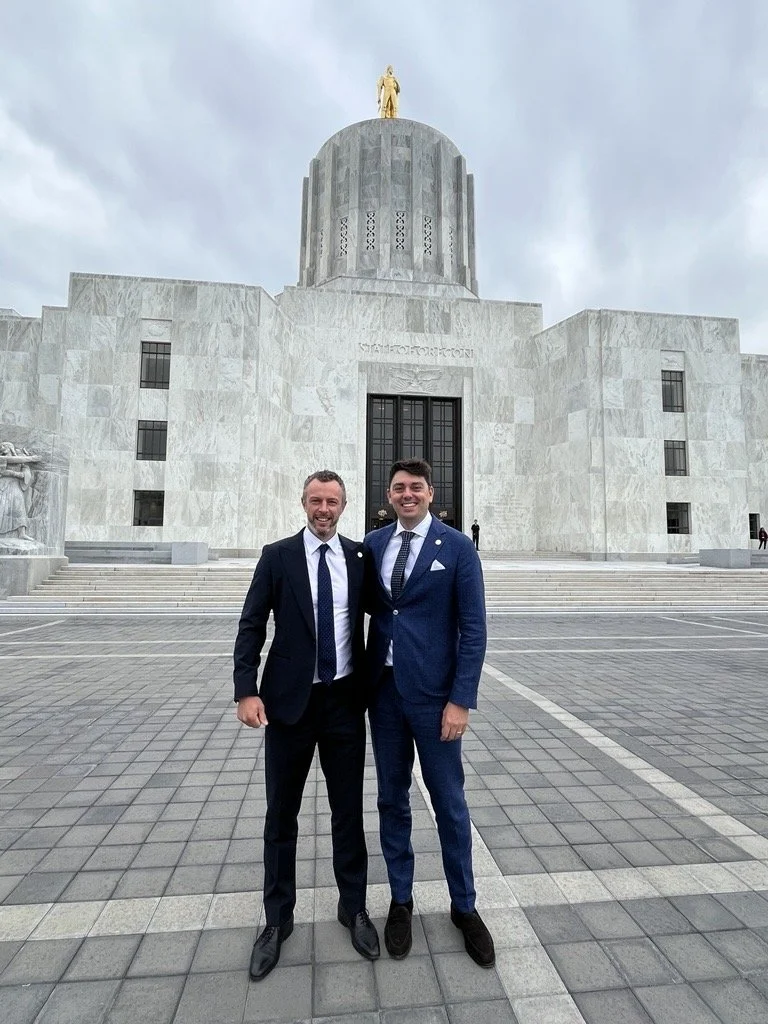
Anthony (left) and Matter CEO, Adam Root, (right) outside the State of Oregon
In America this translates into 81% of survey respondents demanding action, starting with a mandate for all domestically manufactured washing machines to feature in-built microplastic filtration systems. Oregon and California have both drafted legislation for such a mandate, but implementation won’t be any time soon, while the EU, UK and Australia are also moving slowly along this journey. When a survey in the world’s largest consumer market shows overwhelming demand for a microplastic reduction solution that is readily available, there is a chronic mismatch between society’s expectations and the current state of political and brand inertia.
But here lies the opportunity and the significant risk both in the boardroom and at the political dispatch box. For legislators, failure to respond to an issue of growing public concern increasingly carries political consequences. For global brands, waiting for regulation before acting may prove an equally costly strategy. As consumers and voters become better informed, microplastics are evolving from an environmental issue into a reputational one for both politicians and brands.
France was hailed as a global pioneer for its legislation banning the sale of washing machines without microplastic filters in 2025. However, the government’s failure to publish technical filter definitions and standardised testing to enforce compliance has left the law largely unenforceable. In California, the bill to introduce microplastic filters to all washing machines sold in the state (Assembly Bill 1628), was vetoed by the state Governor on grounds including cost and the requirement for more data.
These high-profile setbacks illustrate the practical challenges of regulating an emerging issue and as the scientific evidence builds, public concern is advancing faster than legislative frameworks. In this space is a clear and present opportunity for brands and legislators to step up, confront the issue and secure the rewards for taking a proactive stance to reduce microplastic pollution. There are signs that the U.S. government is taking this seriously and putting a marker in the sand.
This year the U.S. Environmental Protection Agency (EPA) added microplastics as a priority contamination group in its draft Sixth Contaminant Candidate List (CCL 6) in public water systems. This is an early warning to clothing brands that microplastics are on the federal regulatory radar, alongside PFAS ("forever chemicals”) which have notably generated civil class actions and state investigations with highly damaging reputational consequences for global brands.
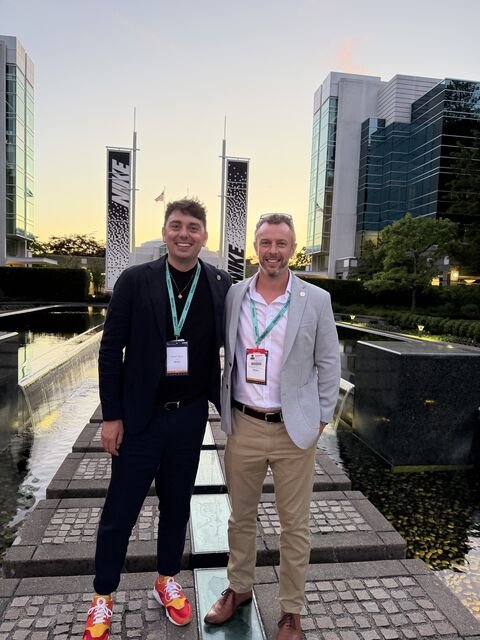
Adam Root (left) and Anthony Kolanko (right) at Nike HQ
As I referenced earlier, change is undeniably coming, the question is now about timing. With awareness at its highest ever levels, the first mover advantage for a brand that has comprehensively redesigned its approach to the design, manufacture and lifecycle of its products in response to the microplastic crisis is considerable. A growing ecosystem of forward-thinking NGOs, like Fashion for Good, are bringing together stakeholders across the globe to collaborate and innovate in the cause of sustainable industry transformation. If as a brand you’re not on this journey, an urgent course correction will be required to avoid being left adrift.
My time in Oregon gave me the opportunity to see first hand the solutions being developed to reduce the likelihood, and subsequent impact, of microfibre pollution. However, I left without detecting a sense of urgency proportionate to both the global scale of the challenge and the pace at which public awareness is evolving.
Microplastics are no longer a scientific issue seeking public attention, they are now firmly a public issue awaiting political and commercial leadership. Those organisations recognising this shift and acting before they are compelled to do so will be far better placed than those ignoring the problem.
A version of this article was published in TechEdvocate.
