
Engineering Regen®: From Assembly to Pilot Deployment
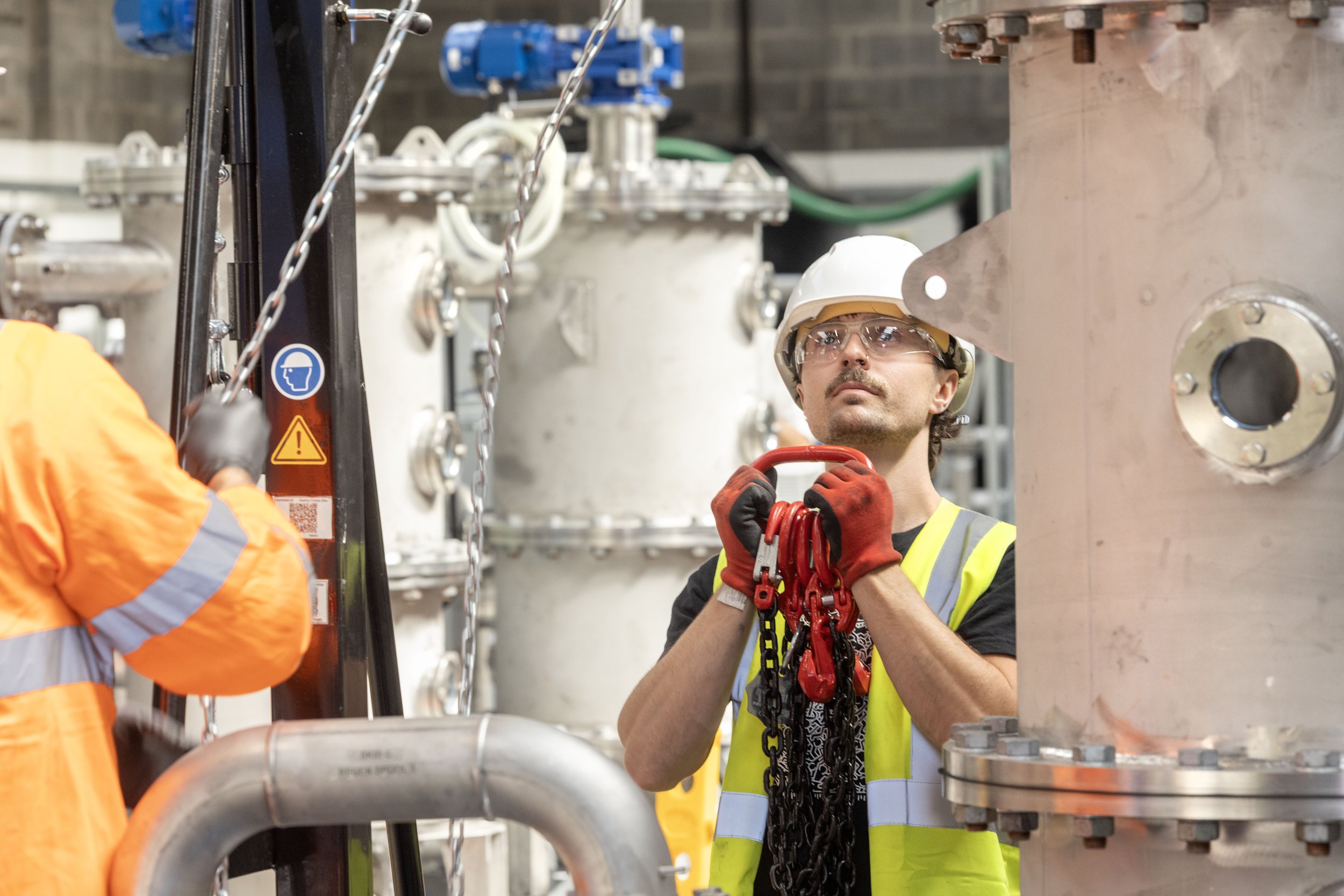
Since the arrival of our Regen® for Textiles pilot at HQ, the engineers have been working hard to ensure that the technology is assembled, tested and prepared to go to its first destination, Portugal!
Before the filters leave, we sat down with Senior Design Engineer, Fergal Feeney, to learn more about the technical process behind preparing, assembling, and testing the units.
How has Matter been preparing for the arrival of the filters at HQ?
The arrival of our Regen® for Textiles pilot filters marks the culmination of months of planning, preparation and engineering work behind the scenes.
Since securing the warehouse facility where the filters would be assembled and tested, we've been adapting the space to meet the demands of the project. Working within a compact footprint while accommodating oversized deliveries and heavy lifting equipment has required careful planning and coordination.
To reduce risk, one of our engineers spent time at the fabrication facility during the final stages of assembly and quality assurance. This allowed us to verify that the units were being built to specification, gain first-hand insight into the assembly process, and capture valuable information that would support installation and commissioning at HQ.
At the same time, we worked to make the arrival process as streamlined as possible. Key infrastructure, including skids, pipework and test beds, was assembled in advance, transforming the final installation into a much more efficient "plug-and-play" operation.
What happens when the filters arrive at Matter HQ?
While the arrival of the filters is an exciting milestone, it's only the beginning of a carefully curated process.
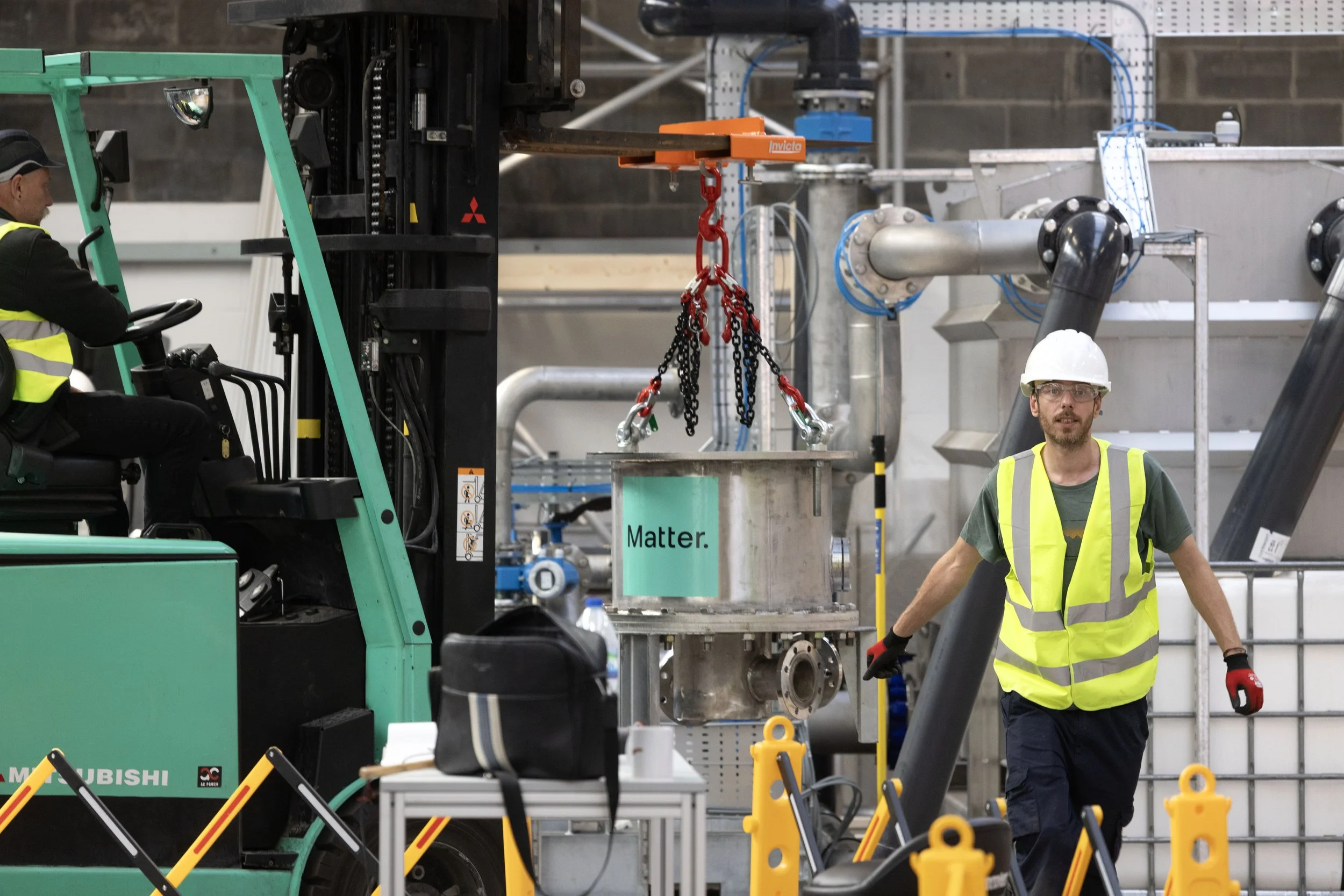
Regen® for Textiles unit is lifted from transport position
When the units arrive, they're brought into the warehouse for unpacking and initial inspection. Although comprehensive quality checks have already been completed at the fabricator's facility, we carry out our own visual inspections to confirm everything has arrived in the expected condition.
One of the most technically demanding stages follows: lifting the filter from its transport position into its operational orientation. This is a tightly controlled procedure involving a combination of lifting equipment, including a forklift, engine hoist and gantry crane.
Once upright, the filter is positioned onto its pre-assembled skid, which acts as the foundation of the system. Engineers then secure the filter and begin integrating the remaining components, including pipework, instrumentation, sensors and support structures.
With mechanical assembly complete, the unit moves into its next critical phase: testing and validation.
What is involved in the testing process?
The testing phase is split into two types of tests, FAT (factory acceptance tests) and performance tests.
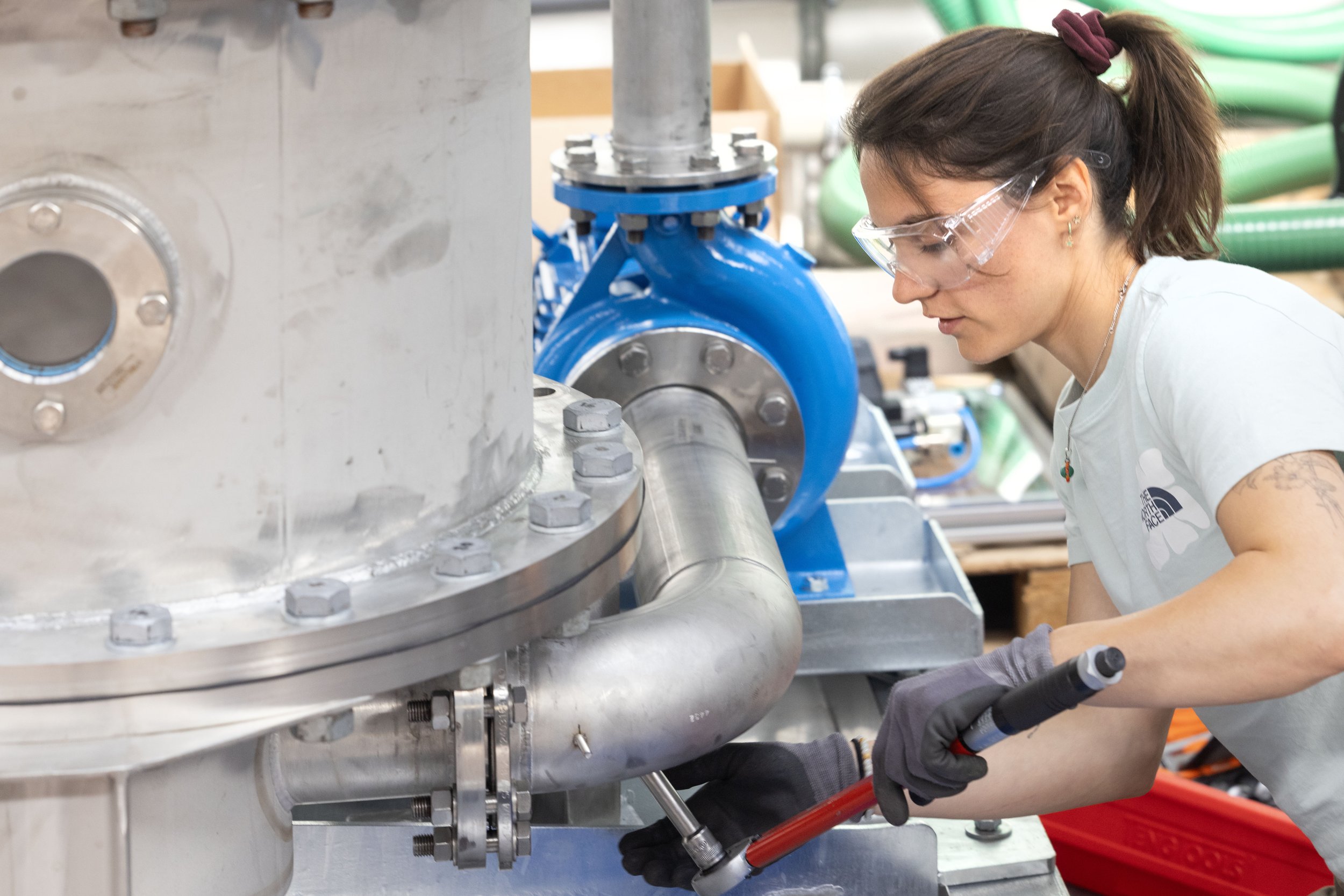
Regen® for Textiles unit is assembled
FATs are tests that are mandatory acceptance tests, required for every individual filter before it can be released for installation. These are part of quality control and a prerequisite to shipping the filters.
Performance testing looks beyond basic functionality and focuses on understanding how the technology behaves under real operating conditions.
These tests evaluate areas such as filtration efficiency, Regen® flow mechanics and overall system performance. Some of this work takes place here at Matter, where we can closely monitor and analyse results.
Ultimately, the testing programme is about ensuring that when customers deploy our technology, they're receiving a solution that delivers maximum performance, reliability and value.
Has there been any challenges?
As with all new technology development, there are challenges to overcome.
Supplier delays must be navigated and any issues that occur during the assembly and testing phase are promptly troubleshooted to manage timelines, with the team providing their expertise during agile project reviews and pitching in to get the job done.
We were also aware that the lifting of the filters could be a challenge as their lifting features were not originally designed for this type of lift or the equipment that we had available. We overcame this through extensive brainstorming and research to come up with a plan that was both safe and effective.
What’s next for the unit?
With assembly and testing nearing completion, the focus now shifts to the next milestone: deployment into a live industrial facility.
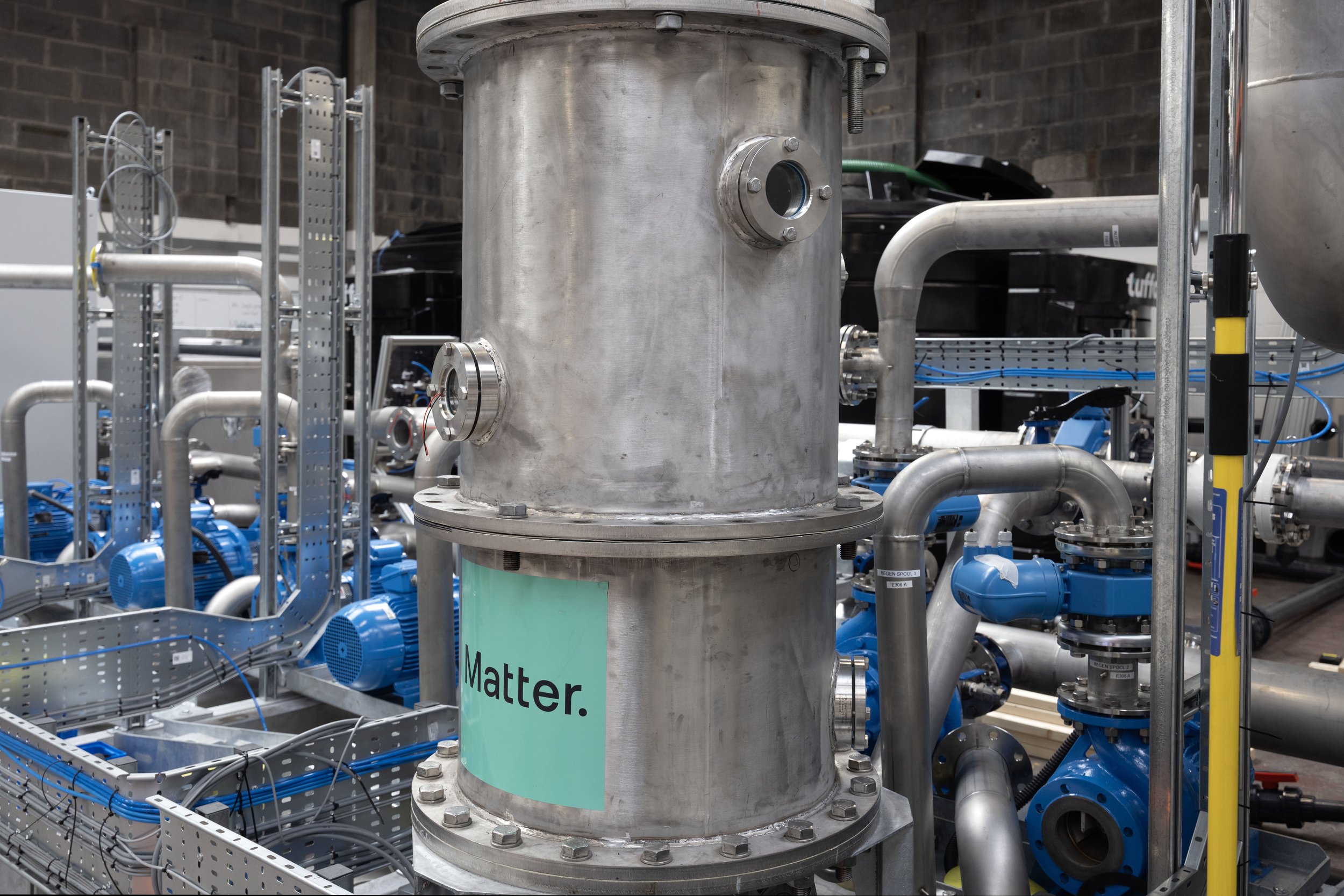
Regen® for Textiles assembled
Once the pilot unit completes testing, we will pack it into our custom crate. We’ll then send it to site in Portugal via road freight, alongside a shipping container with our control panel, tools and everything else required to complete the installation.
The engineering team will travel to meet the unit at the facility, overseeing installation and ensuring everything is operating as expected. For the first time, the technology will be tested in a live industrial environment, an important step in validating performance outside the controlled conditions of the workshop.
It's a significant moment for the project. After months of design, fabrication, preparation and testing, the technology is about to enter the real world. The lessons learned during this next phase will play a crucial role in shaping the future development of the system, and we'll be sharing updates as the project progresses.
