
Ideas to Industry: A note from our Head of Engineering, Reuben
This month, our Regen® for Textiles will be heading out into field for the very first time- this is a huge step in our journey here at Matter, and one we are incredibly proud of.

To celebrate this milestone we spoke with Reuben, Head of Engineering (and first ever Matter team member!) to share what this means for Matter.
Since joining soon after our conception in 2019, Reuben has been involved in everything here at Matter - from setting up the lab and working on the early technology and product design to now developing our technical intellectual property and delivering products to customers, all whilst building and supporting the team itself.
How does it feel to see Regen® for Textiles rolling out?
Here at Matter, we are proud to have built an incredibly competent and technically minded engineering team that are dedicated to developing innovative filtration solutions.
But, as with all new technology development, and especially at the speed and scale that we have been working, there are always unforeseeable challenges to overcome.
That’s why it’s so rewarding to see all the team’s great work come together and result in this important moment: Matter’s industrial scale Regen® technology being tested in field for the first time.
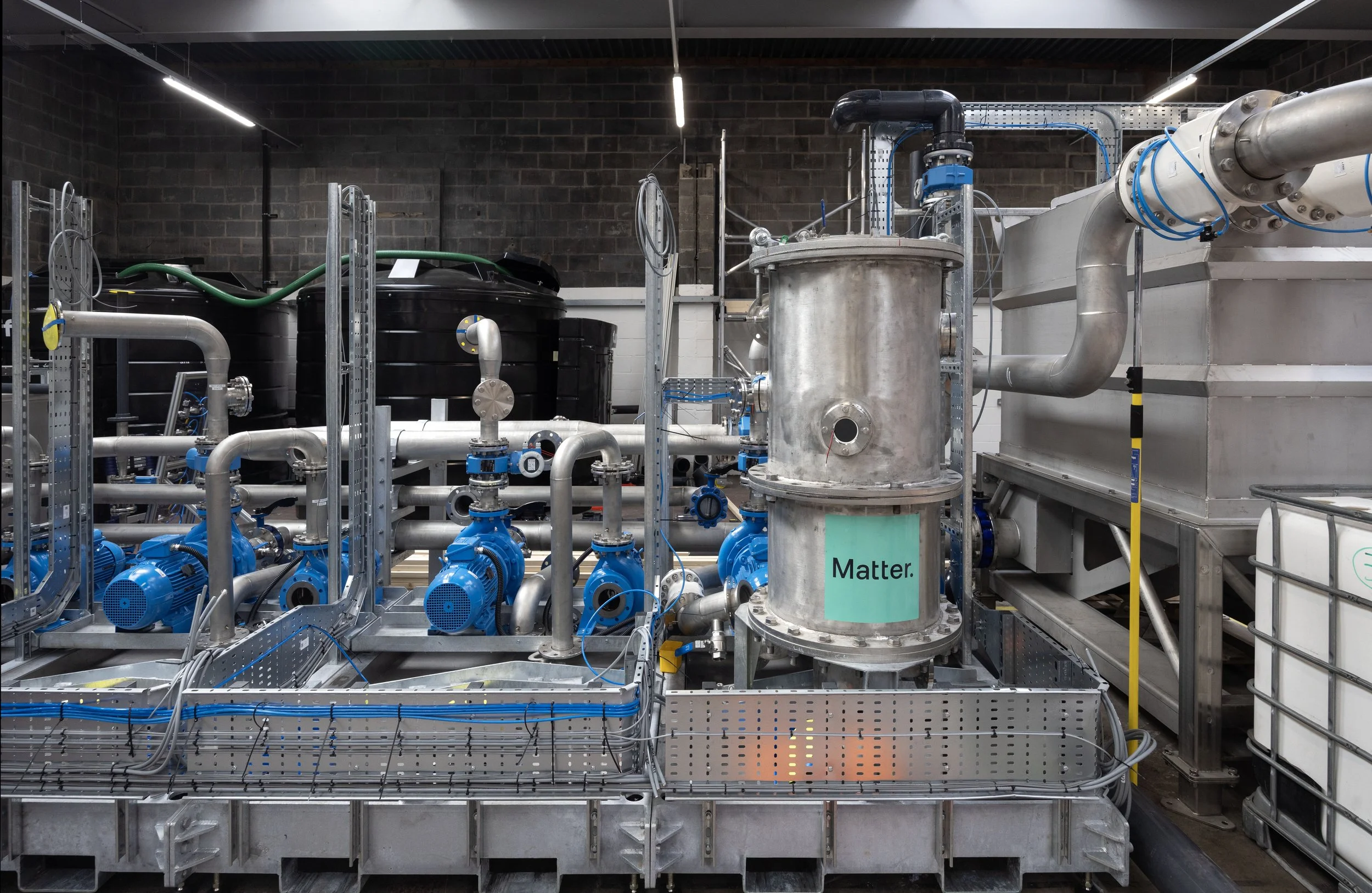
Regen® for Textiles pilot unit
Tell us about the process to develop Regen®
Regen® was initially developed for use in domestic washing machines.
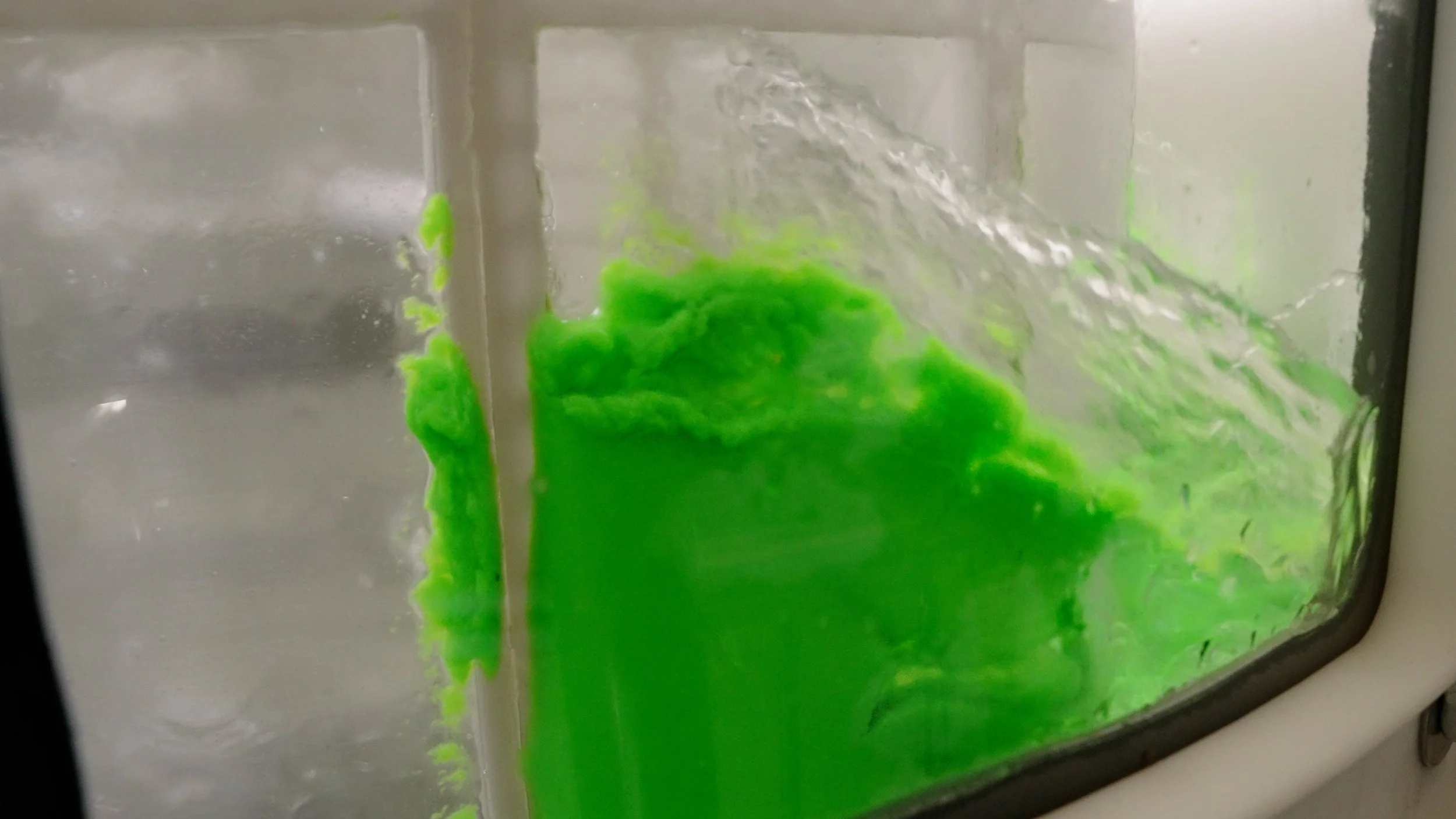
Demonstration of capture
One of the biggest moments in the development of Regen® came when we made the decision to completely rethink the core technology after months of development. It was a big call at the time, but it ultimately led to what is now Matter’s Regen® technology, the same technology that we’re scaling today.
Early in our development, we realised that industrial applications of Regen® would be an enormous opportunity for us to have impact at a larger scale, with textiles accounting for over a third of primary microplastics entering our oceans. Having successfully designed our technology for domestic use, the next step was to scale up the technology.
Meeting customer needs and ensuring the end solution is commercially viable has been fundamental to Matter’s development process. In addition to capturing microfibre pollution, we want to help manufacturers reduce overall energy consumption, minimise chemical usage, and decrease the physical footprint required for treatment infrastructure. It’s about making the entire process more efficient and sustainable from the ground up.
What key milestones stand out to you in Matter’s journey so far?
The roll-out of our industrial filters is a huge milestone at Matter.
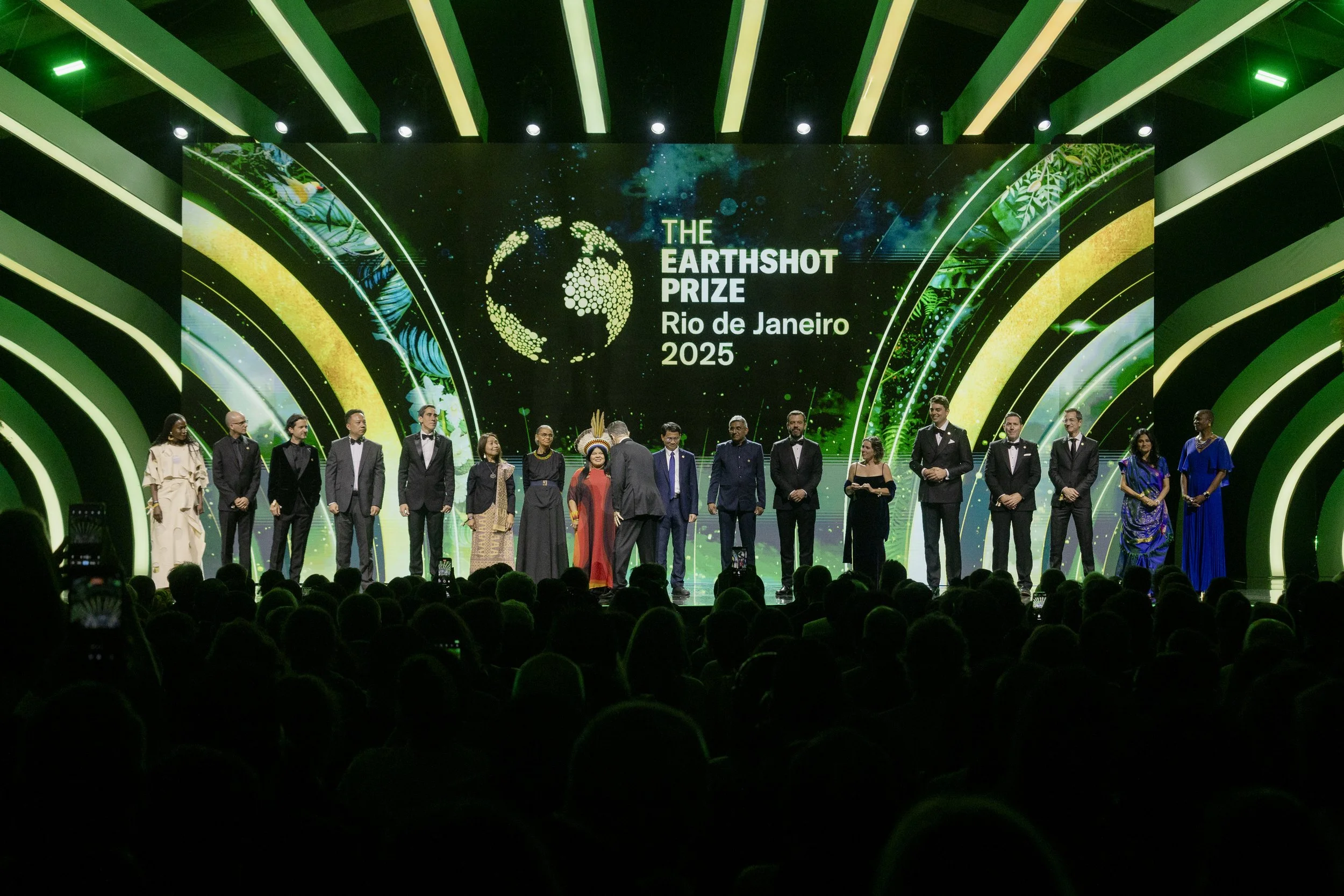
On stage at Earthshot 2025
We know that proving the technology, scaling it and taking it to pilot stage is where we can have an even bigger impact on microfibre pollution, which we’re really excited about.
It also feels like we’ve reached a point where Matter is really starting to gain recognition. A couple of other big milestones stand out, like securing B/S/H as a partner to launch the Bosch Microplastic Filter and being named a finalist in the Earthshot Prize 2025.
What impact could widespread adoption of Regen® for Textiles have on the environment over the next 5–10 years?
When adopted at scale, the potential impact of our technology will be huge.
Microfibre pollution is a global issue, individual contributions at a site level can add up quickly, more so when you multiply that across industries and geographies.
Over the next five to ten years, widespread adoption could significantly reduce the amount of microfibres entering waterways, which has knock-on benefits for ecosystems and, ultimately, human health too.
How has the engineering team grown alongside the business?
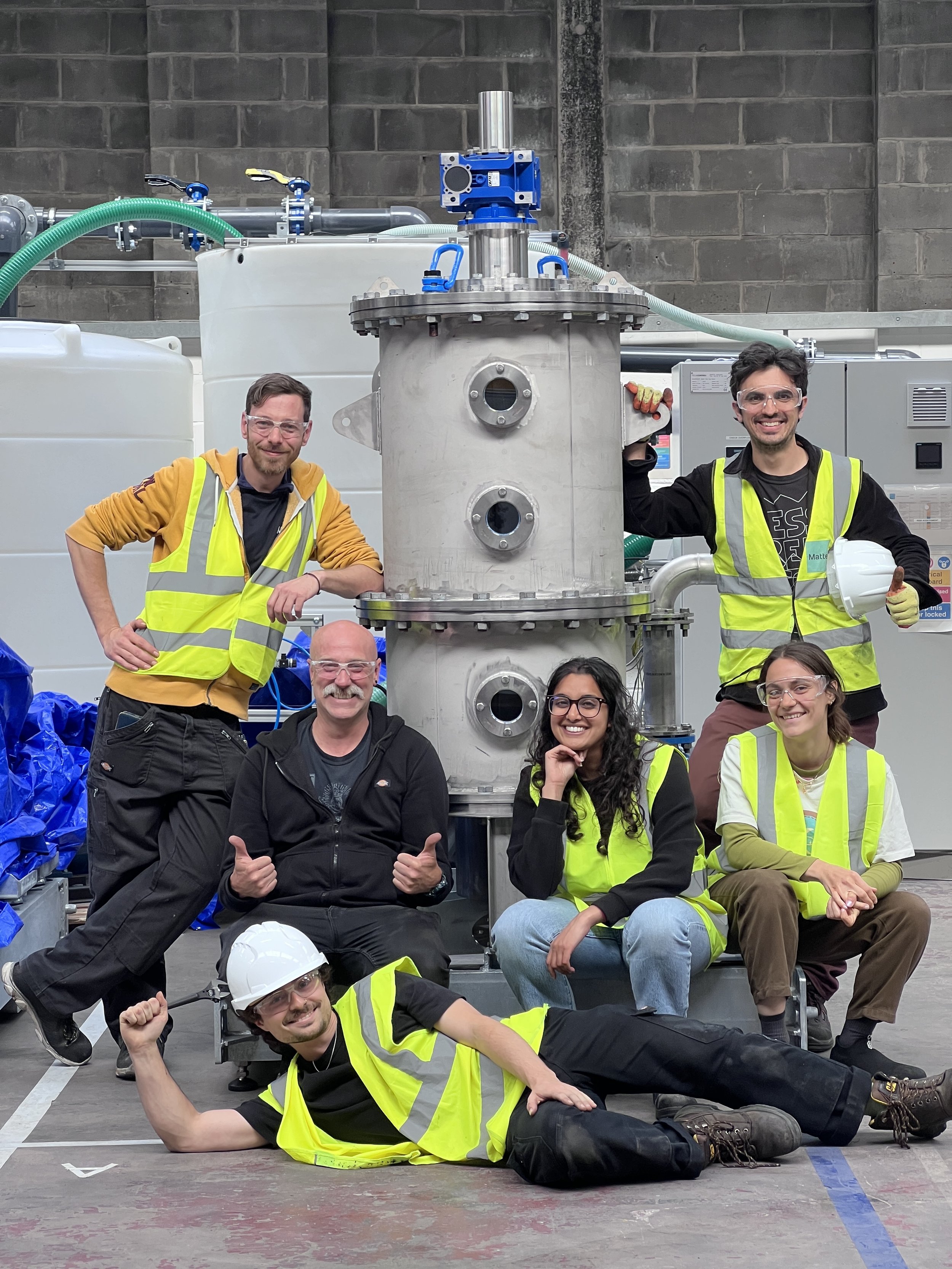
Some of Matter’s team celebrating delivery of the pilot units.
Engineers make up half of Matter’s headcount. It’s crucial to us that Matter’s technology is at the forefront of what we do as we strive to transform industries through technology that empowers customers and protects the planet.
In the early days, we were a small company focused mainly on research and development, working on the fundamentals of the technology. As we started working with multinational customers, the focus expanded. We needed to deliver on external projects as well as continuing our own internal development, which meant growing the team and broadening the skill set.
As a team, we’ve moved beyond a purely consumer product focus and into industrial mechanical engineering, as we’ve diversified our Regen® technology into textile manufacturing environments. The team has expanded over this period to bring in new expertise where needed as well as leveraging existing skill sets and developing new skills through training and development.
What’s next for the team?
One of the most exciting things for us right now is getting Regen® for Textiles into field and learning from real world use.
These insights will play a big role in how we continue to refine the design. It allows us to improve performance, streamline how the system is manufactured and assembled, and make sure we’re delivering the best possible value for customers. Ultimately, it’s all about making sure the product truly meets market needs and is ready to scale.
Beyond that, there’s a lot more in the pipeline. We’ve got a number of ideas for enhancements and entirely new applications of the technology that we’re really excited about, so there’s plenty more to come!
