
From Consumer Demand to Legislation: The US Microplastic Opportunity

Louis Frank, Business Development Manager
As momentum continues to build around tackling microplastic pollution, Matter's Business Development Manager for Laundry, Louis Frank, recently travelled to the United States to meet with the washing machine manufacturers, legislators and NGOs (Non-Governmental Organisations) at the forefront of the conversation.
From conversations around integrated filtration technology to meetings exploring the future of microplastic legislation, the visit provided valuable insight into how the industry is responding to one of its most pressing environmental challenges.
We caught up with Louis to hear about the opportunities he sees for the industry, and why collaboration will be key to accelerating progress.
What was the purpose of your visit to the US?
In June 2025 we saw our Regen® technology hit the market in Europe with the launch of the Bosch and Siemens Microplastic Filter. In the months that followed, we saw a significant increase in engagement from US-based home appliance manufacturers wanting to learn more about our technology and how it could help address growing consumer demand for microplastic filtration.
This interest was boosted further following the release of 'The Plastic Detox' in March 2026, a documentary focused on the impact of microplastic pollution on fertility. The documentary acted as a catalyst for consumer awareness and a desire to act, prompting an influx of direct enquiries. This reinforced the importance of directing our attention to the US market.
At the same time, we are seeing considerable momentum building behind legislative efforts in certain US states to mandate the inclusion of microplastic filters in domestic and commercial washing machines. During my visit, I attended the National Caucus of Environmental Legislators (NCEL) in Chicago to meet with Senators from New York, Oregon, California and Michigan who are directly involved in bringing relevant legislation forward.
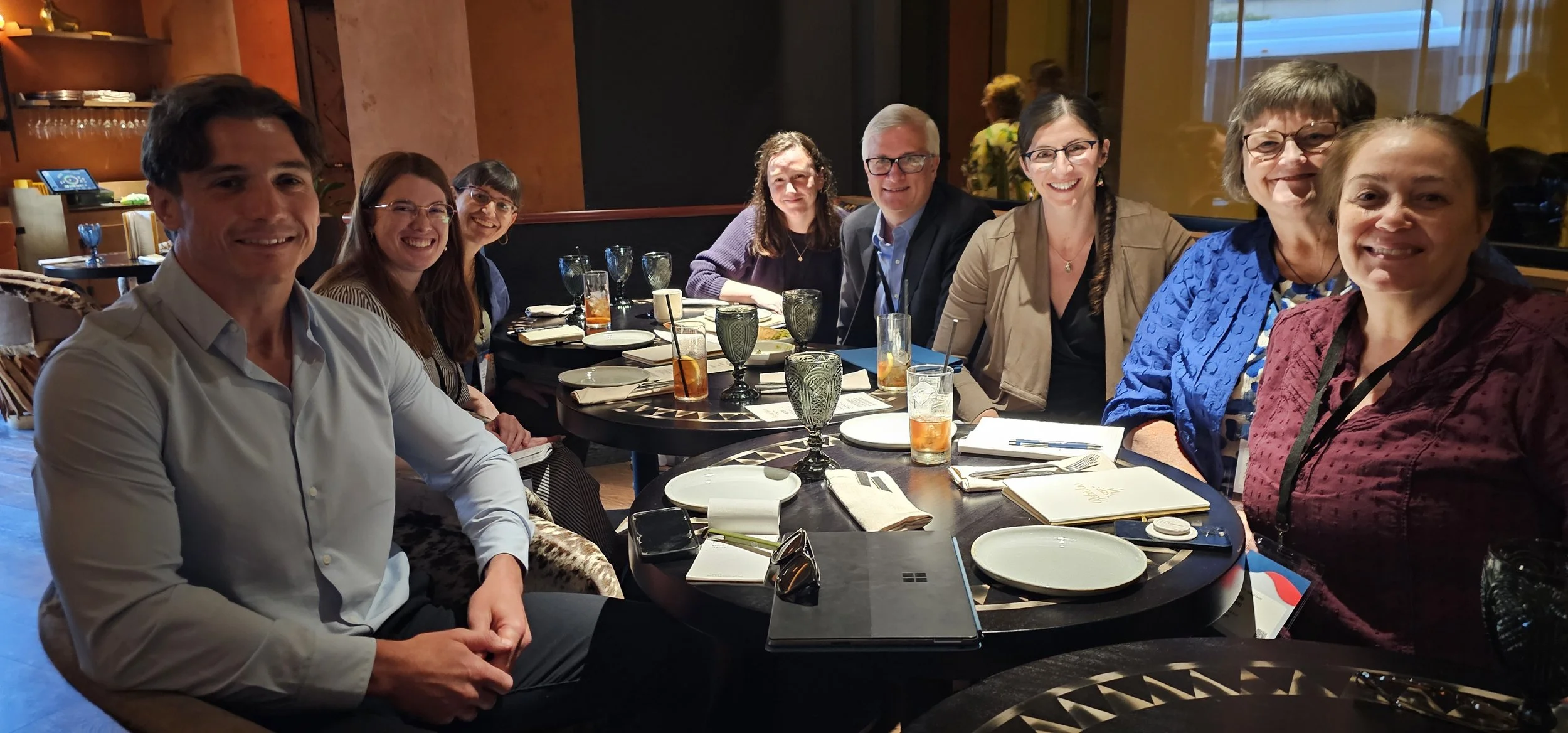
(Left to right) Louis Frank, Ann Marie Nicholson, Julia Meltzer, Coco Marcil, Brian Kavanagh, Anja Brandon, Janeen Sollman, and Nicole Lowen
Given our leading position as a technology provider in the market, Matter is uniquely placed to share first-hand evidence and technical insight to help inform discussions around how effective, practical and commercially viable filtration solutions could be implemented.
From your conversations, has there been a tangible difference in consumer awareness to microplastics?
Since the Bosch and Siemens Microplastic Filter launch, the volume of enquiries we are receiving from consumers in the US regarding how to purchase a unit has been consistently high month to month. This is reflective of recent polling conducted by our collaborators at Ocean Conservancy* which revealed:
'Since 2023, there has been a 32% increase in Americans who are aware of microplastics, with 91% of those surveyed saying they were aware of microplastics. In 2023, 41% of respondents said they had never heard of microplastics which is down to only 9% today.'
The growth in consumer awareness of the harms caused by microplastic pollution, particularly when compared with other markets, underlines a significant opportunity.
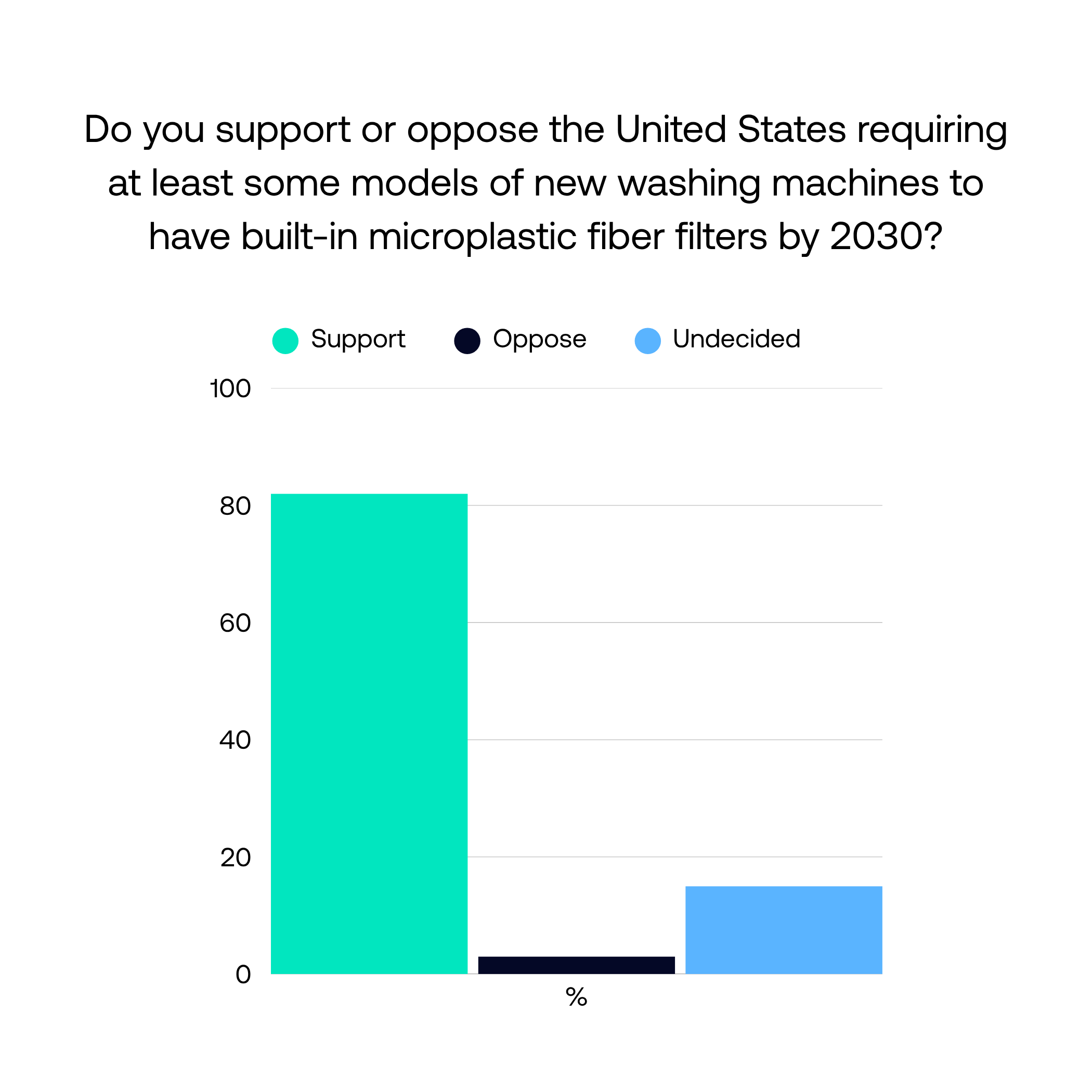
The research also strong public support for washing machine manufacturers to take action, with 82% of the public supporting the requirement for all new washing machines manufactured in the U.S. to have built-in microplastic filters by 2030.
When considering the size of the US market from a washing machine manufacturer standpoint, this growth in awareness and support for manufacturer-led solutions points towards a significant commercial opportunity.
Why do you believe washing machines have such an important role to play in reducing microplastic pollution?
Tackling microplastic pollution at scale requires action from a number of different industry stakeholders.
At Matter, we recognise the importance of addressing this pollution upstream during the textile manufacturing process and downstream at municipal wastewater treatment sites. Our Regen® technology is designed to address these different sources, and we are active across both of these sectors.
With that said, we strongly believe home appliance brands have a leading role to play. Washing machines are one of the main sources through which microplastic fibres from synthetic textiles enter our waterways. Every time we wash clothes made with materials such as polyester, nylon or acrylic, tiny fibres can be released into the wastewater.
Conventional washing machines are designed to clean clothes, but not to capture these fibres before they leave the machine. This makes the washing machine a particularly powerful point of intervention.
Unlike many sources of microplastic pollution that are difficult to control at scale, washing is a repeated, everyday activity taking place in millions of homes around the world. Integrating effective microplastic filtration directly into washing machines could therefore prevent a significant proportion of these fibres from entering wastewater systems in the first place.
In the US alone there are approximately 113 million households with washing machines installed which highlights the size of the opportunity. We also know through our research that US consumers have a strong desire to limit their impact, and this is growing every day.
For appliance brands, these factors represent more than an environmental challenge, they present an opportunity to make a tangible difference through products that consumers already own and use regularly.
By incorporating microplastic filters into machines in the future, manufacturers can help turn an everyday household appliance into an important part of the solution, while also realising the commercial opportunity and getting ahead of emerging regulatory expectations around microplastic pollution.
Why should manufacturers act now?
Given our proximity to current discussions and the complexities of developing filtration technology, Matter is strongly encouraging home appliance brands to leverage the expertise available and begin considering integrated technology early to ensure they are as prepared as possible.

Matter’s integrated filter being demonstrated
We recognise the challenges that integrating filters can pose to manufacturers and it is important that these challenges are well represented and answered in the legislative process.
Designing filtration into a washing machine is a product-development decision, and product development cycles are measured in years, not months. Our ambition is to remove as much of the risk from the development process as possible, allowing home appliance brands to implement solutions quickly and efficiently when legislation is passed.
It's also important that we remove as much risk from the development process for manufacturers as possible.
We work collaboratively with legislators, lobbyists and home appliance brands to support solutions that are both commercially viable for manufacturers and technically robust enough to deliver a tangible environmental impact.
There is growing discussion around legislation in the US. What did you learn from those conversations?
It is clear from our meetings at NCEL in Chicago that there is a significant opportunity to support legislation when it is re-introduced in key states next year.
Despite the progress that has been made, legislators face strong opposition from industry lobbying groups who have concerns related to the financial burden and technical efficiency of solutions currently available on the market.
Matter's Regen® technology for laundry has been developed to address these challenges, and our role is to provide evidence and technical insight to support informed discussions around what effective filtration could look like.
For home appliance brands our biggest takeaway is that this is the moment to engage, rather than waiting until legislation is finalised.
Whilst testing standards for any mandated solution will be an important consideration, those brands that begin now to understand what consumers need and what effective filtration looks like will be better positioned for the future.
What’s next for Matter and the US?
The trip reinforced the significant opportunity in the US and the importance of continuing to engage with manufacturers, legislators and other industry stakeholders as the conversation develops.
Our next steps will be focused on continuing those conversations, supporting home appliance brands as they explore integrated filtration, and sharing the technical insight and evidence we have developed through our work with Regen®.
There is a clear appetite for solutions, and we believe collaboration across industry, technology providers and policymakers will be critical to turning that appetite into meaningful action.
