
Global report reveals the scale of microfibre emissions from textile manufacturing
30 July 2026
Matter, the pioneering environmental technology company and Earthshot finalist, has contributed to a major new study on the global impact of production-phase microfibre emissions from the textile manufacturing sector. Microplastic fibres, from the production and laundering of textiles, are the single largest contributor of microplastics in the environment.
This research is the first global system-level assessment to quantify microfibre losses and environmental leakage associated with textile manufacturing, which in 2024 is calculated at 92 thousand tons annually, or 670 mg of fibres shed for every kilogram of textile manufactured.
The report by Earth Action and supported by The Nature Conservancy, alongside global brands including Patagonia, Under Armour and Decathlon, is a benchmark study to generate greater visibility alongside actionable solutions to the growing challenge of microfibres shed from the textile manufacturing process, which encompass synthetic microfibres (or microplastic fibres), man-made fibres and natural fibres.
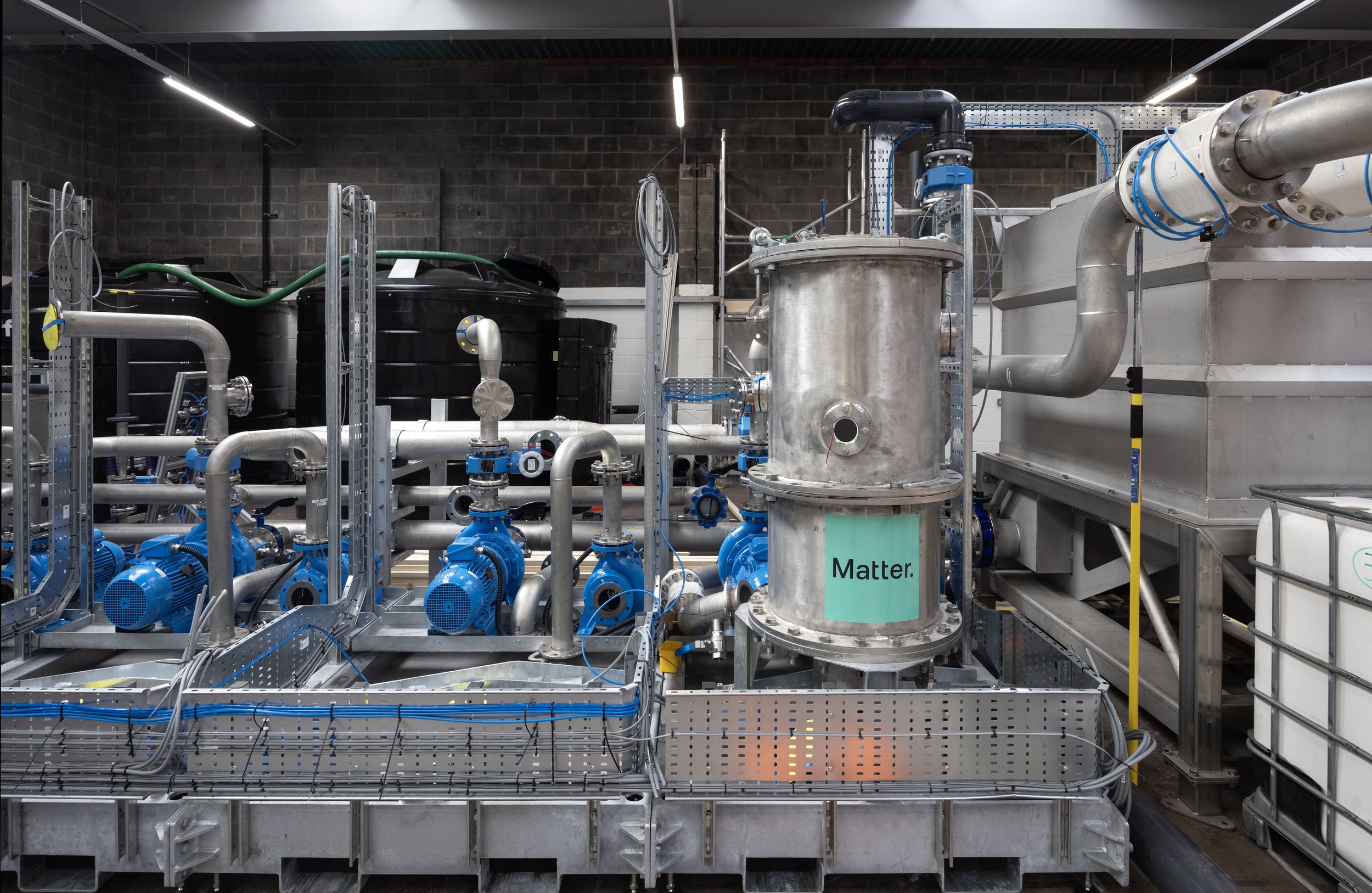
Matter’s industrial microfibre filter: Regen® for Textiles
As one of the world’s leading innovators in microfiltration technology, Matter has been developing, testing and bringing to market domestic, commercial and industrial microplastic filters with up to 97% efficiency. This extensive research and development journey, involving partnering with leading laboratories and researchers, has delivered some of the first real-world data on microfibre behaviours, characteristics and concentrations, which has helped strengthen the modelling framework underpinning the new Earth Action study.
The report represents a clarion call for a systems-based approach to tackle the significant challenge of microfibre proliferation across the globe. The research highlights the impact of positive interventions in upstream processes, such as product design, materials used and the production phase, as well as in downstream actions, including wastewater treatment and ‘sludge’ management. When action is taken across these connected areas, the report suggests up to a theoretical 95% potential reduction in production-phase microfibre emissions within the environment by 2032.
The report authors are candid about the current limitations surrounding data sources and standardised measurement approaches. As the breadth and depth of academic research continues to build within this field, the quality and volume of data assets will further refine and inform the global microplastic and microfibre response. Matter is currently working alongside its research partners to develop the world’s first standardised and open-source approach and methodology for measuring microfibre concentrations to set a global benchmark for measurement.
Scott Voisey, Principal Product Manager at Matter, said:
“Real-world measurements at the wet processing and effluent treatment stages reveal a level of variability that is not yet fully reflected in current industry averages. In addition, differences in testing methodologies create further challenges in generating consistent, comparable datasets.
Matter is working collaboratively with industry partners, including NGOs and textile manufacturers, to develop a standardised approach to measurement, enabling more aligned and robust research across the sector.
We look forward to using our direct field data and insights to support future versions of this report, helping to close the gap between modelled estimates and factory floor reality, and our ambition is to make this methodology widely accessible across the industry.”
